

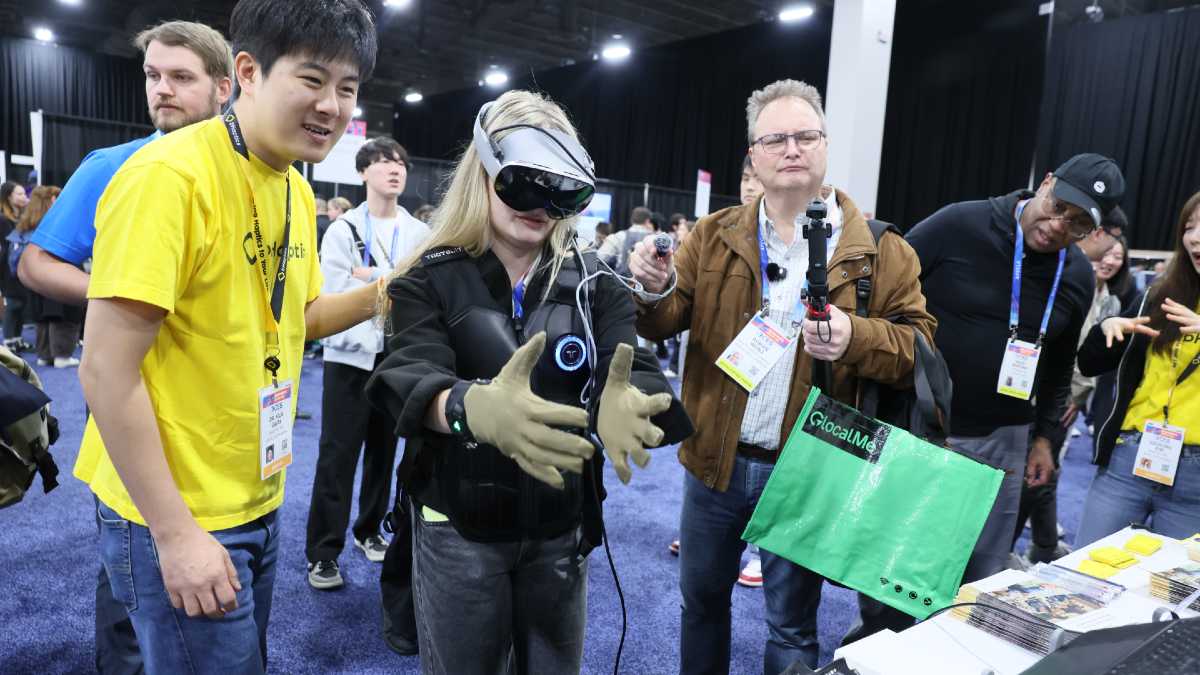
Latin America. As every year, the Consumer Electronics Show, CES, was once again the main thermometer of where the global technology industry is moving.
Beyond the one-off launches, CES 2026 left a clear signal: artificial intelligence is no longer presented as a category of its own and has become the transversal layer on which practically all new products and services are being built.
That changes the competitive logic of the sector. It is no longer a question of who has "more AI", but of who manages to integrate it more efficiently, more usefully, and with less friction for the user. The career ceased to be technological in the strict sense and began to be strategic, of system design, user experience and, increasingly, of control over data, platforms and ecosystems.
Perhaps the most obvious trend was the integration of artificial intelligence into domestic robotics which, for the first time, did not feel like an exaggerated prototype but as a close reality. Robots stopped being toys to become multifunction assistants capable of executing specific tasks, from cleaning to interaction beyond a simple voice command. This evolution speaks of an industry convinced that automation is no longer optional, but necessary to gain time and efficiency in daily life.
Additionally, AI was not limited only to robots or isolated devices, it was present in wearables that no longer only capture basic metrics, but already offer behavioral interpretations, in screens that personalize content based on habits, and in systems that anticipate routines, suggest actions and eliminate unnecessary steps. Integration is already found even in home appliances, where AI not only simplifies operations but also analyzes, predicts and proposes, transforming traditional artifacts into personal assistants.
CES 2026 also showed a thematic expansion that goes beyond the smart home: digital health technology, advanced mobility and continuous monitoring systems are entering everyday life with an ambitious promise, that of anticipating problems before they occur and facilitating informed decisions.
However, this technological omnipresence does not come without questions. As AI becomes integrated into more aspects of daily life, significant challenges arise around privacy, regulation, and technological dependency. It is not only a technical issue, but also a social and ethical one. This debate, which is beginning to emerge strongly, will be as relevant as the innovations themselves, because it defines how we will coexist with these tools in the coming decades.
In the end, CES 2026 was the photograph of a moment of transition: technology is ceasing to be a spectacle and is transforming into an environment. And that changes not only what we wear, but how we live, work, and relate to the world.
Analysis by Gonzalo Rojon of The Competitive Intelligence Unit, The CIU.